
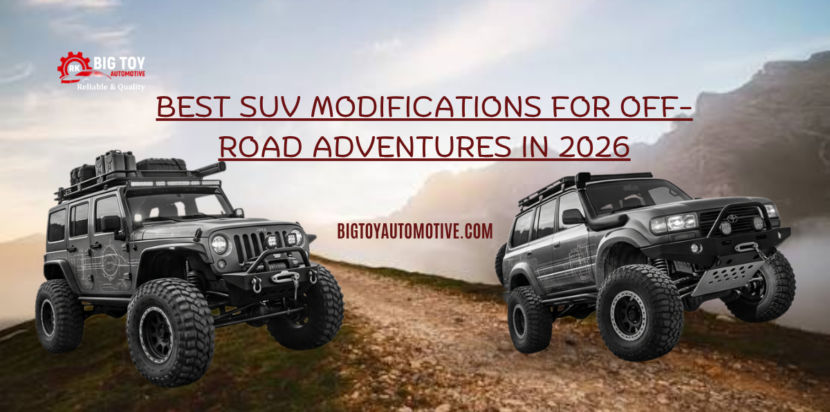
Off-roading looks exciting when you watch a modified SUV climbing a rocky trail or crossing a muddy road. But when you actually take your SUV into rough terrain, the experience can be very different.
A normal SUV may handle city roads and highways comfortably, but deep mud, loose sand, rocks, steep climbs, and uneven trails can put serious stress on the vehicle.
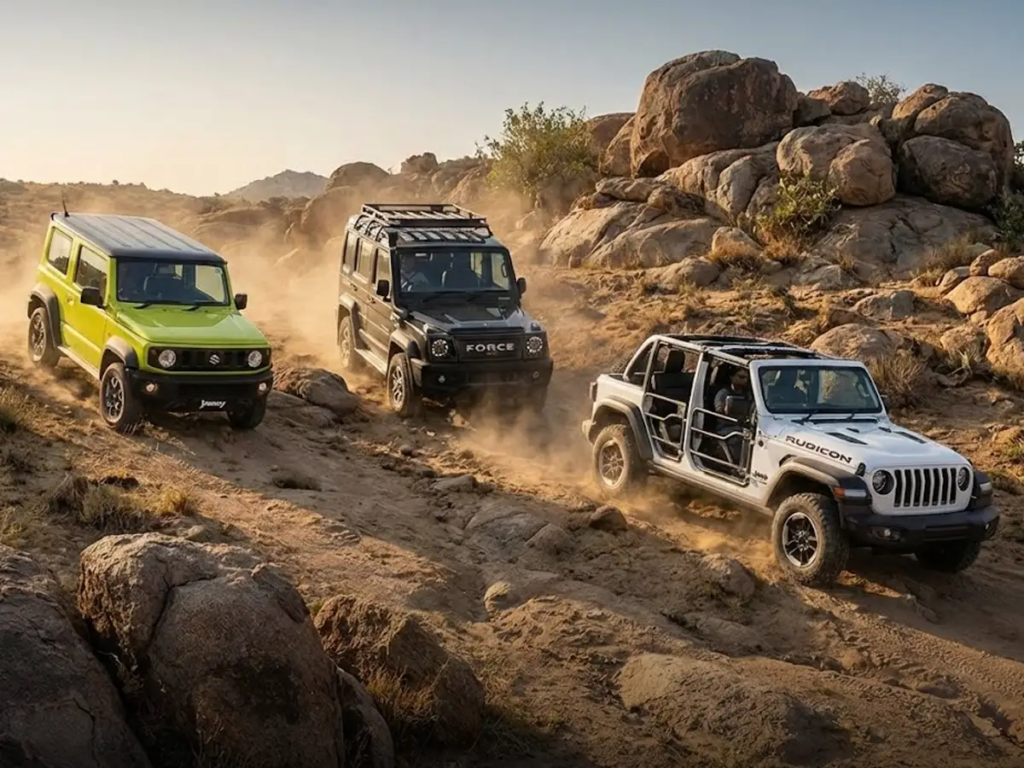
This is where the right SUV modifications for off-road driving can make a real difference.
The good news is that you do not need to modify everything at once. A few practical upgrades can make your SUV safer, stronger, and more capable on difficult roads. The key is choosing modifications according to the type of off-roading you actually do.
1. Upgrade to All-Terrain or Mud-Terrain Tires

Tyres are one of the first things you should consider before taking your SUV off-road.
Standard road tires are designed mainly for highways and city roads. They can struggle when you encounter loose sand, mud, gravel, or wet rocks.
All-terrain tyres are a good choice if you use your SUV both on roads and off-road. They provide better grip without making everyday driving too uncomfortable.
If your trips involve deep mud and challenging trails, mud-terrain tires can offer even more traction.
For example, imagine driving through a muddy village road after heavy rain. Your SUV may have enough engine power, but if the tires keep spinning, that power is not useful. Better tires can help the vehicle maintain grip and move forward.
Practical tip: Choose the tyre according to your usual terrain rather than simply buying the most aggressive-looking option.
2. Increase Ground Clearance

Ground clearance becomes important when driving over rocks, deep ruts, and uneven trails.
The underside of an SUV can easily hit a large stone or raised section of a trail. This can damage important components underneath the vehicle.
A properly planned suspension lift can provide additional ground clearance. However, lifting an SUV too much is not always better.
An excessive lift can affect handling, suspension geometry, braking, and tire alignment.
A moderate lift designed specifically for your SUV is usually a better approach.
Before installing a lift kit, talk to an experienced off-road SUV modification specialist. They can help you choose a setup that suits your vehicle and driving conditions.
3. Install Skid Plates for Underbody Protection
Many off-road problems happen underneath the SUV.
While crossing rocky trails, you may not always see what is directly under the vehicle. A sharp rock can hit the engine area, transmission, fuel tank, or other vulnerable components.
Skid plates act as a protective shield underneath the vehicle.
They are especially useful for people who regularly explore rocky and uneven terrain.
Think about a weekend trip to a hill area. You are driving slowly over a rocky section when the front of the SUV drops onto a stone. Without proper protection, that impact could turn a fun trip into an expensive repair.
A strong skid plate can reduce the risk of damage.
4. Add Recovery Equipment
Getting stuck is part of off-roading. Even an experienced driver can get caught in deep mud or loose sand.
This is why recovery equipment should be considered an essential part of your off-road setup.
Depending on your SUV and the type of trails you visit, useful equipment may include a recovery strap, rated recovery points, traction boards, and a suitable winch.
A winch can be particularly helpful when travelling through remote areas, but it should be installed correctly and used safely.
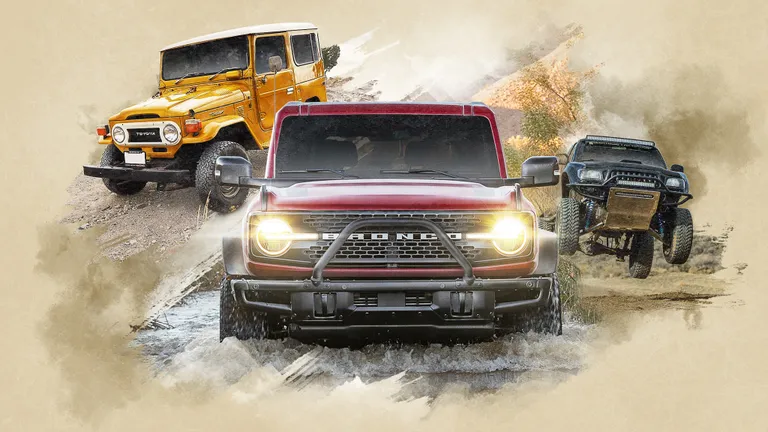
Recovery points are also important. Attaching recovery equipment to an unsuitable part of the vehicle can cause serious damage.
The simple rule: Do not wait until your SUV is stuck to learn how your recovery equipment works. Practice using it in a safe environment first.
5. Upgrade the Suspension
Off-road driving puts more pressure on the suspension than normal city driving.
A suitable suspension setup can help the SUV deal with bumps, dips, rocks, and uneven surfaces more effectively.
A good suspension upgrade is not simply about making the SUV look taller. It should improve control while maintaining reasonable comfort and stability.

For example, if your SUV frequently bottoms out on rough trails, a properly selected suspension setup may help solve the problem.
However, suspension modifications should be matched with the vehicle’s weight, tire size, and intended use.
A professional installation is important because incorrect suspension changes can create new handling problems.
6. Protect the Front and Rear of the SUV
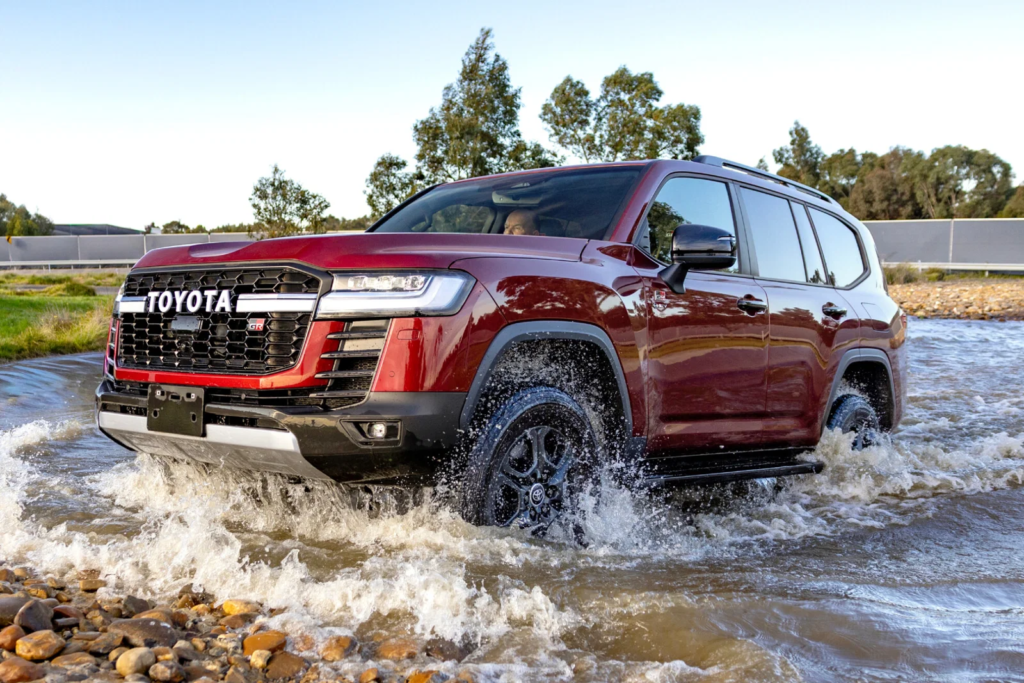
Off-road trails can be unpredictable. Branches, rocks, and steep approaches can damage the front or rear of your SUV.
A suitable front bumper, rear protection, or rock sliders can provide additional protection, depending on the vehicle and terrain.
Rock sliders are particularly useful on rocky trails because they help protect the sides of the vehicle when the SUV passes close to rocks.
But remember that adding heavy accessories can increase the vehicle’s weight. Extra weight can affect fuel consumption and performance.
So, install protection where you genuinely need it rather than modifying the SUV simply for appearance.
7. Consider a Snorkel for Water Crossings
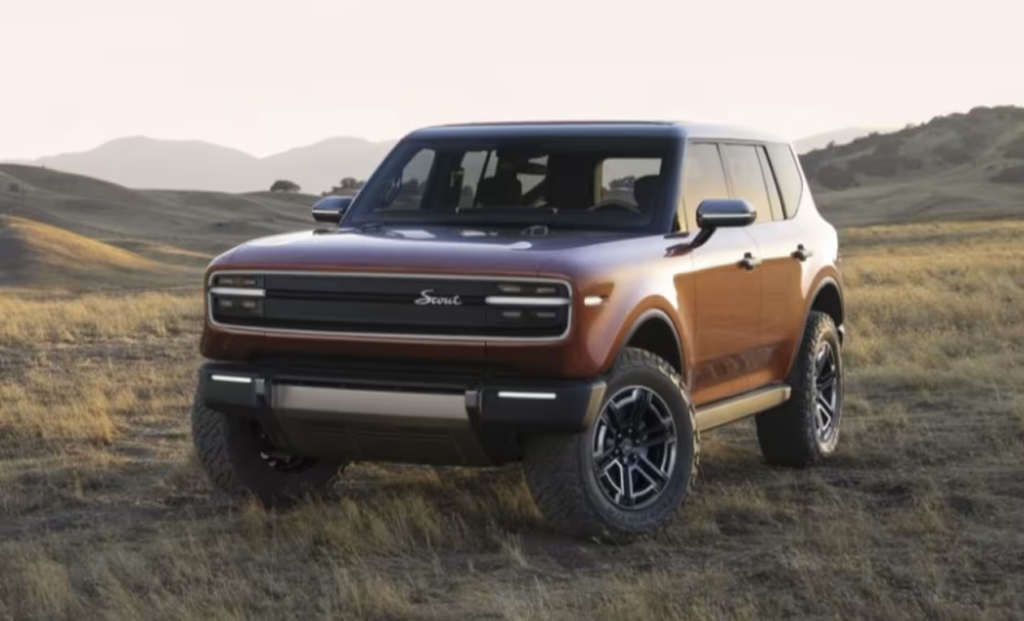
If your off-road trips regularly involve water crossings, a snorkel may be worth considering.
A snorkel raises the engine’s air intake, which can reduce the risk of the engine taking in water during certain water crossings.
However, a snorkel does not make an SUV waterproof.
Water can still enter through other areas, and deep water can damage electrical components, the transmission, or other parts of the vehicle.
Always check the actual water depth and know your SUV’s safe limits before attempting a crossing.
Choose Modifications Based on Your Real Needs
One common mistake is copying another person’s off-road build.
A heavily modified SUV may look impressive, but it may not be suitable for your daily driving.
If you mostly drive in the city and occasionally visit mountain trails, all-terrain tires, underbody protection, recovery equipment, and a sensible suspension upgrade may be enough.
If you regularly drive through deep mud, rocks, and remote trails, you may need a more complete setup.
The best SUV modifications for off-road adventures are the ones that solve actual problems without creating unnecessary ones.

Professional Installation Matters
Modification quality is just as important as the parts you buy.
Incorrect wheel alignment, poorly installed suspension components, weak recovery points, or badly fitted electrical equipment can create safety problems.
Before modifying your SUV, speak with an experienced automotive workshop such as Big Toy Automotive. Professional inspection can help you understand what your vehicle needs and which modifications make sense for your driving style.
A good off-road build is not about having the biggest tires or the tallest suspension. It is about creating a balanced SUV that you can confidently drive both on the trail and back home.
Final Thoughts
Off-roading is about exploration, but preparation makes the experience much better.
Start with the basics: good tires, suitable ground clearance, underbody protection, recovery equipment, and a reliable suspension setup. Add other modifications only when your driving conditions require them.
Most importantly, remember that a modified SUV still needs a skilled and responsible driver.
The right off-road SUV upgrades can make your vehicle more capable, but knowing the terrain, driving within your limits, and carrying proper recovery equipment are equally important.
A well-planned SUV is not just built to look tough. It is built to get you there and bring you back safely.
1. What is the first modification I should make to my SUV for off-roading?
Good all-terrain tires are usually a sensible starting point. They improve traction on mud, gravel, sand, and uneven surfaces.
2. Is increasing ground clearance necessary for off-roading?
Not always. It depends on the terrain you drive on. Moderate additional clearance can help prevent the underbody from hitting rocks and deep ruts.
3. Are mud-terrain tyres suitable for daily driving?
They can be used for daily driving, but they may produce more road noise and offer different road manners compared with all-terrain tires. For mixed city and off-road use, all-terrain tyres are often more practical.
4. Do I need a winch for off-road driving?
Not every driver needs a winch. However, it can be valuable for regular off-road trips, especially in remote areas or difficult mud and trail conditions.
5. Should I get my SUV professionally modified?
Yes, especially for suspension, recovery points, electrical systems, and major structural modifications. Professional installation can help ensure the upgrades work safely with your vehicle.
Table of Contents
Latest News
Read Related Blogs