

Introduction
Imagine a high-profile executive driving late at night on a quiet highway. Suddenly, an unexpected attack occurs. In a normal car, even a single gunshot to the tire or window can disable the vehicle completely.
This is why standard cars are not designed to handle ballistic threats.
Modern bulletproof car technology is far more advanced than simply adding thick glass. Today’s armored vehicles in India are built with multiple protective systems working together to keep passengers safe.
These systems include:
- Run-flat tyres
- Ballistic glass
- Armored steel plating
Together, they create a vehicle capable of protecting occupants during dangerous situations while still allowing the car to remain operational.
How Modern Bulletproof Cars Actually Work
Many people believe that armored vehicles only use bulletproof glass.
In reality, a true armored vehicle is a fully engineered protection system.
Modern bulletproof cars include the following:
- Reinforced vehicle structure
- Ballistic steel protection
- Multi-layer armored glass
- Run-flat tyre systems
- Upgraded suspension and braking systems
Every component works together to ensure the vehicle can absorb attacks while still driving safely. This is why professional engineering is essential when building high-security vehicles.
Ballistic Glass: The First Line of Protection
One of the most important components in ballistic glass cars is the multi-layer armored glass used in the windows.
Ballistic glass is not a single piece of glass. Instead, it is made from multiple layers of glass and polycarbonate materials bonded together.
When a bullet hits the surface:
- The outer glass layer absorbs the impact
- The inner polycarbonate layer prevents penetration
- The structure holds the glass together instead of shattering
This prevents bullets from entering the passenger cabin.
Luxury armored vehicles such as the Mercedes-Benz S-Class and Toyota Land Cruiser often use thicker ballistic glass for higher protection levels.
For example:
- BR4 level protects against handgun fire
- BR6 and BR7 levels protect against high-powered rifles
The higher the protection level, the thicker and stronger the glass must be.
Armored Steel: Protecting the Vehicle Body
While ballistic glass protects the windows, the vehicle body also needs protection.
This is where armored steel plating is used.
Special ballistic steel panels are installed inside key parts of the vehicle, including:
- Doors
- Roof
- Pillars
- Firewall
- Rear panels
These panels stop bullets from penetrating the vehicle body. A critical part of armored vehicle engineering is eliminating weak points. Professional installers ensure that steel panels overlap correctly so there are no gaps in the protection system.
Run-Flat Tyres: Escape Even After an Attack
Another critical feature in run-flat tires for bulletproof cars is the ability to keep moving even if the tires are damaged.
Run-flat tires are specially designed with reinforced sidewalls or internal support rings.
Even if the tire is
- Punctured
- Shot
- Completely deflated
The vehicle can still drive for several kilometers at controlled speeds.
This allows the driver to:
- Escape the danger zone
- Reach a safe location
- Avoid being stranded during an attack
High-security SUVs such as the Toyota Land Cruiser 300 and Mercedes-Benz G-Class commonly use advanced run-flat tire systems.
Other Hidden Technologies Inside Bulletproof Cars
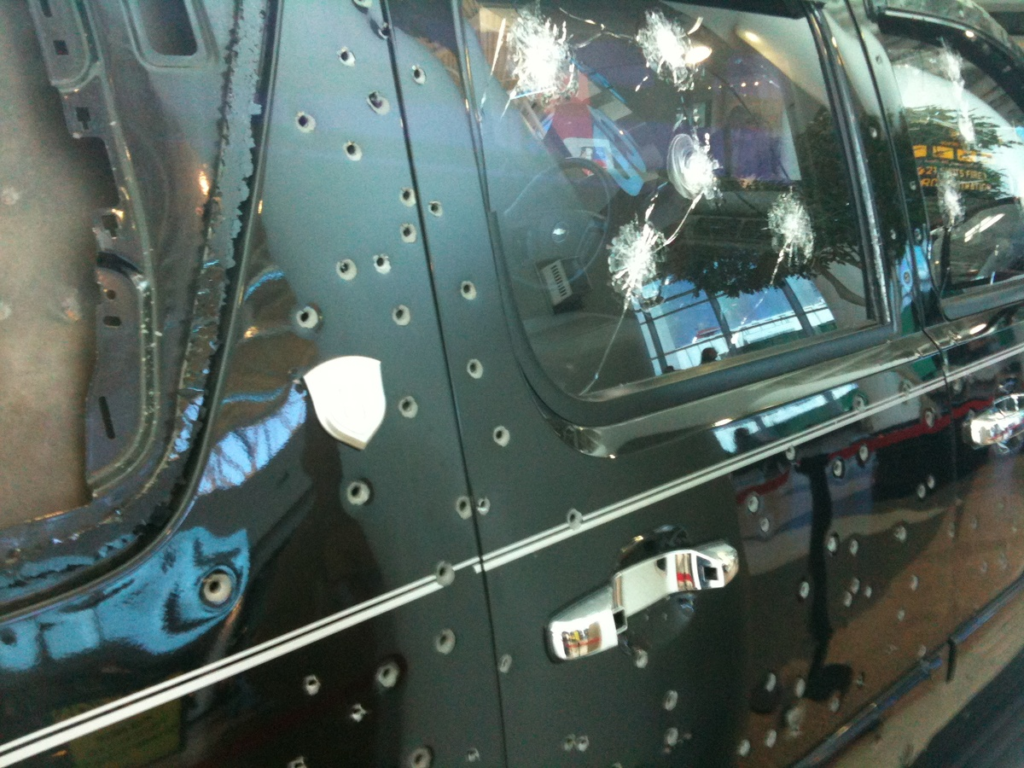
Beyond glass, steel, and tires, modern armored vehicles include many additional safety systems.
These often include:
- Reinforced suspension to support extra armor weight
- Armored fuel tank protection to prevent explosions
- Battery and ECU protection to keep electronics running
- Explosion-resistant floor panels
- Fire suppression systems
These technologies ensure the vehicle remains operational even during extreme situations.
Why Professional Armoring Is Critical
Installing armor in a vehicle requires precise engineering.
Poor-quality armoring can create serious safety risks, such as:
- Weak gaps in protection
- Excess weight is damaging the suspension
- Improper glass installation is causing failure during impact
This is why armored vehicles must be built by experienced vehicle security specialists. Proper engineering ensures the vehicle remains balanced, reliable, and fully protected.
Expert Armoring Services at Big Toy Automotive
For clients seeking high-security vehicle upgrades, Big Toy Automotive provides professional armored vehicle solutions.
Their services include:
- Bulletproof vehicle customization
- Installation of ballistic glass systems
- Armored steel protection upgrades
- Run-flat tyre systems
- Security upgrades for luxury vehicles such as BMW, Audi, and Mercedes-Benz
They assist clients across Delhi NCR who require advanced vehicle protection and armored vehicle engineering.
Final Thoughts
Modern bulletproof car technology is far more advanced than many people realize.
A properly armored vehicle combines ballistic glass, armored steel plating, and run-flat tyres to create a comprehensive protection system.
Each component plays a crucial role in protecting passengers and ensuring the vehicle can continue moving during dangerous situations. Most importantly, professional engineering and installation are essential to ensure that armored vehicles remain safe, reliable, and effective in real-world threats.
Frequently Asked Questions (FAQs)
What are run-flat tires in bulletproof cars?
Run-flat tires are specially designed tires that allow a vehicle to continue driving even after a puncture or gunshot damage. They help the driver escape dangerous situations without stopping immediately.
How thick is ballistic glass in armored vehicles?
Ballistic glass used in armored vehicles is usually 20 mm to 70 mm thick, depending on the protection level, such as BR4, BR6, or BR7.
Are bulletproof cars completely bulletproof?
No vehicle is completely bulletproof. However, armored vehicles are designed to stop specific types of bullets and threats depending on their ballistic protection level.
How much does bulletproof car armoring cost in India?
The cost of armoring a vehicle in India typically ranges from ₹50 lakh to over ₹2 crore, depending on the protection level, vehicle type, and installed technologies.
Can luxury cars be converted into bulletproof vehicles?
Yes. Many luxury cars, such as BMW, Audi, and Mercedes-Benz, can be professionally converted into armored vehicles using ballistic glass, armored steel, and run-flat tire systems.